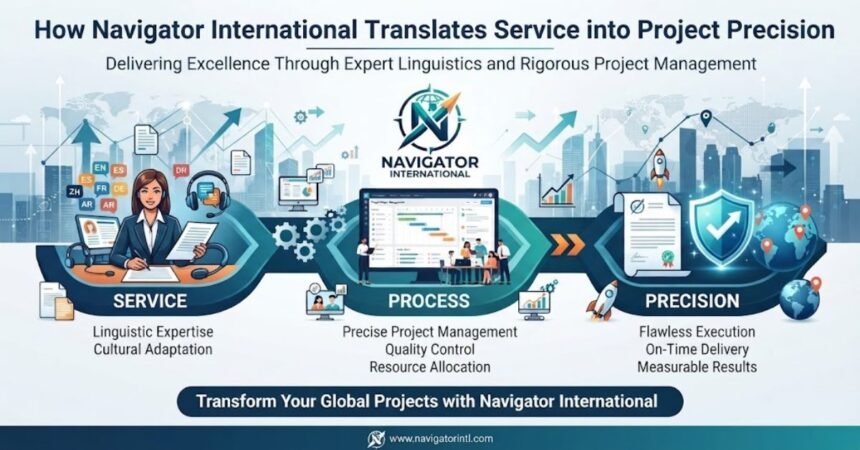
Precision on a government construction project comes from dozens of decisions made before, during, and after fieldwork. Service becomes useful when teams turn client requirements into clear scopes, verified materials, controlled schedules, and documented results. That connection helps complex domestic and overseas projects stay practical as conditions change.
Clear Scope Definition Gives Every Team a Common Target
Project precision starts with a scope that explains what the client expects, what the contractor must deliver, and how acceptance will be measured. Detailed requirements reduce the chance that designers, buyers, subcontractors, and inspectors interpret the same task differently. Early reviews expose missing information about utilities, security, access, phasing, testing, or permits before those gaps become expensive field changes.
Structured planning gives each requirement an owner and a path to completion. Navigator International Government construction work can connect concept development, design, fabrication, supply, and field execution under a coordinated plan. Defined responsibilities make it easier to track decisions, control revisions, and keep teams focused on the same technical outcome.
Field Coordination Turns Plans Into Orderly Daily Work
Schedules alone cannot control a busy site because crews compete for access, equipment, deliveries, shutdown windows, and inspection time. Daily coordination aligns those needs with the approved sequence so one trade does not block another or cover work that still requires review. Practical supervision helps managers respond when weather, site conditions, or active operations force adjustments.
Consistent communication keeps those adjustments from becoming informal changes. Nav Int teams can use documented requests, updated drawings, meeting records, and field reports to show what changed and who approved it. Clear records protect schedule logic while giving government construction stakeholders a reliable history of field decisions.
Procurement Controls Keep Approved Materials Moving
Material quality starts before purchase. Buyers compare specifications, certifications, lead times, and supplier capacity so products match technical requirements and the planned schedule. Advance review matters for electrical gear, mechanical equipment, structural components, and specialty systems that may take months to manufacture.
Supply coordination grows harder when cargo crosses borders. Capabilities associated with Navigator International Global Construction can support packaging, shipping documentation, phased delivery, and shipment tracking from origin to jobsite. Careful timing reduces storage while helping international construction teams receive critical items in the order crews need them.
Quality Checks Catch Small Errors Before They Spread
Inspection plans define what reviewers will check before work starts, during the first installation, and throughout production. Staged reviews can catch incorrect dimensions, unsuitable materials, weak workmanship, or missing documentation before the same issue appears across multiple rooms or systems. Testing adds evidence where appearance alone cannot confirm performance.
Traceable records strengthen the value of those inspections. Photographs, test reports, delivery tickets, deficiency notices, and signed approvals connect completed work to the applicable drawing or specification. Quality control becomes more useful when the record explains not only that a problem was found, but how crews corrected it and whether inspectors verified the repair.
Logistics Planning Protects Remote and Difficult Worksites
Overseas projects often depend on supply routes that include factories, ports, customs agencies, regional warehouses, local carriers, and restricted jobsite entrances. A delay at any handoff can affect labor productivity and equipment scheduling several steps later. Route studies, delivery windows, alternate carriers, and buffer inventories reduce that exposure without flooding a remote site with stock.
Regional conditions can also change the safest or fastest delivery plan. Global construction teams may need to account for seasonal roads, limited lifting equipment, storage restrictions, or security procedures before releasing a shipment. Thoughtful logistics keeps the field sequence tied to what can realistically reach the site rather than what looks convenient on a spreadsheet.
Technical Support Keeps Decisions Grounded in Real Conditions
Engineering support remains valuable after drawings receive approval because actual field conditions can differ from survey data or design assumptions. Specialists may need to review substitutions, unexpected obstructions, equipment clearances, temporary supports, or revised installation details while construction continues. Timely technical review helps resolve those issues without sacrificing performance requirements.
Experienced coordination also connects designers with the people who will operate and maintain the finished facility. International construction projects benefit when service access, spare parts, training needs, and regional maintenance capabilities influence technical decisions before turnover. Broader planning can prevent a compliant system from becoming difficult to support once the original construction team leaves.
Closeout Discipline Turns Finished Work Into a Usable Asset
Completion involves more than punch-list repairs. Commissioning, as-built drawings, warranties, operation manuals, training records, spare parts, and final test results give the owner the information needed to use and maintain the facility. Organized closeout confirms unresolved deficiencies were repaired and reinspected rather than simply removed from a list.
Long-term value depends on how well construction knowledge transfers to the customer. Services from Navigator International Construction Company span project integration, construction, logistics, supply, and related support functions that can maintain continuity from planning through turnover. For agencies and partners seeking tighter control across complex global construction work, Navigator International offers a coordinated approach that translates responsive service into clearer decisions, traceable execution, and project results that are easier to verify and sustain.